
Seaside Resident Records in Reach
A useful resident lookup is a set of small checks, not a single master list. Monterey County property records can connect a person to taxable real property, an APN, and a deed trail, but an owner is not automatically the person who lives at the situs. Court indexes show parties and docket events. Vital records confirm an event only under the access rules for that copy. Business filings and professional licenses show reported affiliations or credentials. City staff and permit files can establish an official role or a relationship to a project address, not general residency.
| Record | What It Confirms | Where to Search | Access |
|---|---|---|---|
| Assessor and parcel record | Taxable owner, situs, APN, value and parcel traits | Monterey County Assessor and GIS | APN-first; owner-name web search restricted |
| Recorded deed | Grantor, grantee, recording date and legal description | Monterey County Recorder | Index and copies; not all occupants |
| Voter status or file | One voter’s status or permitted election data | California voter services | Self-only status; file has statutory purposes |
| Court index | Party name, case number, type and docket events | Monterey Superior Court | Public limits, fees and closed case material |
| Vital record | Event, named parties, date and place | County Recorder or CDPH-VR | Authorized or informational copy rules |
| Business filing | Entity, agent and reported officers or managers | California bizfile | Filed affiliation, not definitive ownership |
| Professional license | License type, number, status and public discipline | California DCA search | Board and public-field limits vary |
| Unclaimed property | Name plus holder-reported city, ZIP and property clue | California Claim Search | Historical clue; identity proof for a claim |
| City staff directory | Official role, title and public contact | Seaside city directory | Public role, not Seaside residency |
| Permit or code file | Applicant, contractor, owner clue and project address | Seaside department or CPRA request | Disclosable fields and exemptions apply |
Choose the row that matches the starting fact. A case number belongs with the court. An APN belongs with the Assessor and Recorder. A known event date belongs with the vital-record application. A business name belongs with bizfile and then, if useful, the city license layer. This ordering keeps a resident lookup narrow and makes it easier to tell a real record from a name collision.
Note: A Seaside record can sit with the city, Monterey County, a state agency, or a federal custodian, depending on the event.
Match a Seaside Name Across Records
Normalize the name before opening several search windows. Write down surname variants, initials, suffixes, compound surnames, and prior names shown in a known record. A Monterey County result is not automatically a Seaside resident. Postal labels, the wider Peninsula, and business ties create many near matches. The situs city, parcel map, ZIP, middle initial, lawful age clue, co-party names, chronology, and source provenance can separate one person from another.
Start with the most specific fact already in hand. Then cross-check two independent fields. Name plus a city label is weak. Name plus a matching APN and grantee deed is stronger. Name plus an entity number or license number is a better pivot than a common surname. Track the date of every hit because a deed records a transfer, a license has status dates, a court filing has a filed date, and a directory is a publication-year snapshot.
- Record the name exactly as known, then list spelling and initial variants before searching.
- Choose the first custodian from the known fact: parcel, case, event, business, license, or public role.
- Compare at least two fields, such as name and APN, name and case number, or name and entity number.
- Save document numbers, dates, legal descriptions, and the source office beside each result.
- Test the same-name trap against situs city, parcel, ZIP, initials, and chronology.
- Ask for one identified record and a date range when a custodian must supply the next step.
That last step matters. A focused request is more useful than asking an office to create a new resident list. It also leaves room for a protected address, a sealed file, a non-owner occupant, or an old book that has not been digitized.
Seaside Resident Court Search
Monterey County Superior Court handles Seaside cases. Its online search accepts a case number or party name and provides case information, hearings, and fine-payment features without registration. Official court guidance describes current and completed cases back to 2008, while the criminal records page separately discusses online criminal cases after November 1992. Treat those as different coverage statements. Civil, family, and probate questions go to the Monterey Courthouse at 1200 Aguajito Road. Traffic records are at Marina Courthouse, and criminal records are at Salinas Courthouse, 240 Church Street.
The Monterey Superior Court case search is the remote starting point, but it is not the only channel. Clerk terminals allow free self-search. Civil, family, and probate name searches cost $15 when there is no case number or the search takes more than ten minutes. Copies are $0.50 per page, certification is $25, and a dissolution certification is $15 plus page charges. Criminal requests need identifiers such as a case number, full name, date of birth, driver-license information, or violation place and date. Criminal documents remain restricted under California Rules of Court 2.503(c).
The court's result is an index, not a promise that every filing image is remote. A civil or criminal mail request goes to the proper records division with the name and identifiers. Larger or off-site retrieval can take 72 hours, and off-site files typically take 7 to 10 days with a $10 retrieval charge for up to three files. Mail processing has a minimum ten-day period. Juvenile, adoption, sealed, and confidential material has no public workaround.
The court search screen shows the party and case route used before a records request is made.
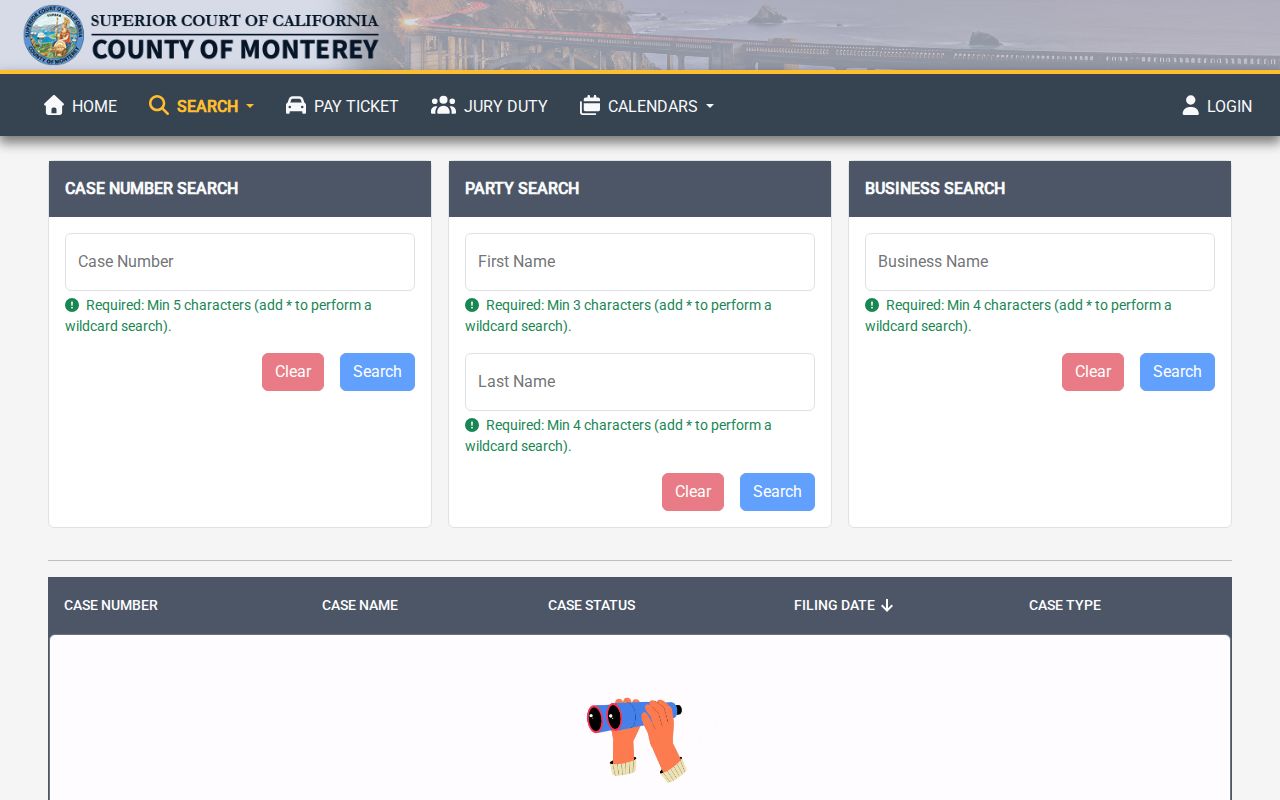
Use the case number and party spelling from a result to narrow any later counter, mail, or copy request; a name match alone does not establish identity.
| Result field | What it can show |
|---|---|
| Case number | The stable case identifier for a later request. |
| Party or caption | The names attached to the case, subject to public display limits. |
| Case type | The division or matter category, such as civil, family, probate, or criminal. |
| Filing and docket entries | Events entered in the register, with dates when the index exposes them. |
| Hearings | Scheduled court events shown by the remote system. |
Federal matters follow a separate route through PACER. The service charges $0.10 per page, usually caps a document at $3, and waives quarterly charges of $30 or less. Federal results should not be blended with Monterey Superior Court records just because a party name is the same.
The federal locator also shows why source boundaries matter: the PACER reference page points to a federal docket system, not a county resident roll.
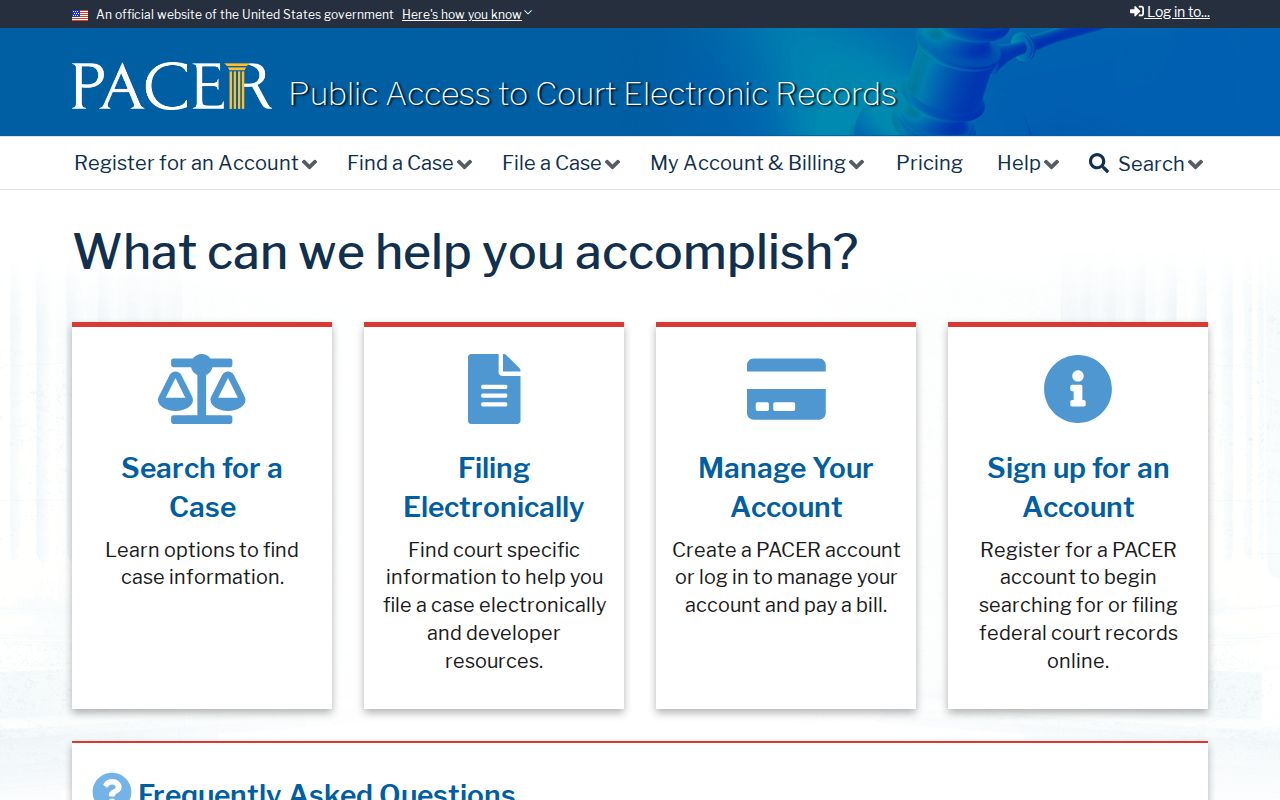
Keep the federal case number and court division with the search notes so a later request reaches the right clerk.
Note: A dismissal or a restricted document can change what an index shows without erasing every agency entry or related record.
Seaside Vital Records for Lookup
California uses authorized and informational certified copies rather than a simple age cutoff for birth and death access. Informational copies are marked and cannot establish identity. Authorized copies depend on the applicant's relationship and, for a mail order, a sworn and notarized statement under Health and Safety Code sections 103525 and 103526. Adoption and certain amended records remain confidential. Public and confidential marriage records also have different access rules.
The Monterey County Recorder at 168 W. Alisal Street, First Floor, Salinas can issue county-event copies, while the California Department of Public Health handles the statewide route. CDPH coverage for births and deaths begins in July 1905. The county counter is a practical local channel when a state form is slow. Divorce decrees come from Superior Court; CDPH's limited divorce certificate of record covers 1962 through June 1984 and is not the decree.
| Record | Coverage and access | 2026 fee |
|---|---|---|
| Birth | County event or CDPH from July 1905; authorized or informational | $31 |
| Death | County event or CDPH from July 1905; authorized or informational | $26 |
| Public marriage | County of license or CDPH; public or confidential copy rules | $19 |
| Confidential marriage | Issuing county clerk; spouses or court-authorized persons | $19 baseline |
| Divorce | Superior Court decree; CDPH certificate of record only for 1962-June 1984 | $18 CDPH certificate |
Forms VS111, VS112, and VS113A ask for the applicant, mailing details, event date and place, named parties, relationship or purpose, number of copies, copy type, and payment. Birth and death forms may ask for parents' birth names. Marriage forms ask for spouses. A search that returns no record generally has the same cost as a copy under section 103650, so the event date and county should be as precise as possible.
- Use an informational copy when the goal is genealogy or an event clue and identity use is not required.
- Use an authorized-copy route only when the applicant meets the statutory relationship rule.
- Use the county counter for a Monterey event and the California vital-records service for the statewide application path.
- Move a divorce question to the court when a certificate of record will not answer it.
Seaside Heirs, Classmates, and Military Connections
A resident lookup can serve a family history or estate question without turning a partial match into a personal profile. For an heir, begin with a decedent's probate case and recorded affidavits or trust-transfer documents, then compare an obituary with later deeds. Sealed or confidential filings stay closed. For a former classmate, newspapers, yearbooks, and community archives can establish a period connection before a current public affiliation is checked through an official filing.
CSUMB digitized every Fort Ord yearbook held in its archive for 1952 through 1975. Those books can reconnect a Seaside-area military classmate or show a command connection that never appears in a deed. They are historical sources, so names and images should be read with the publication year and other records. The Monterey Peninsula's military growth, the 1948 integration of Fort Ord, and the 1994 closure help explain why older resident clues may sit in school, base, or newspaper collections rather than a current city roll.
A birth-parent or adoptee search must use California's official adoption information and reunion channels. Do not try to defeat a sealed adoption file. The goal is a lawful connection, not a forced disclosure.
Seaside Resident License Clues
Business and professional records are useful when a name is tied to a public role. California's business search can show an entity name and number, formation or registration date, status, street and mailing addresses, agent for service, Statement of Information dates, and reported officers, directors, members, or managers. A filing reports what was submitted. It does not establish definitive ownership or personal residence. Distinctive entity names and file numbers are stronger than broad name searches.
The California bizfile business search is free to search, and many recent PDFs are free. Certified products and status certificates may require an order or payment. General partnerships and LLPs are not in the ordinary search, so paper records or the County Clerk's fictitious-business-name route may be needed. A city business license can add a local affiliation, but the city cautions that its 2026 contact-update form is not an application, approval, or license issuance.
For secured-party and debtor filings, the California UCC search uses debtor, secured-party, file-number, individual or organization, date, and lapsed-filing controls. The Secretary of State's business-record information page explains copy channels and the scope of online images. A UCC abstract is a filing clue, not a certified title or residence record.
The Seaside community business directory shows the kind of local listing that can supply a starting name or location.
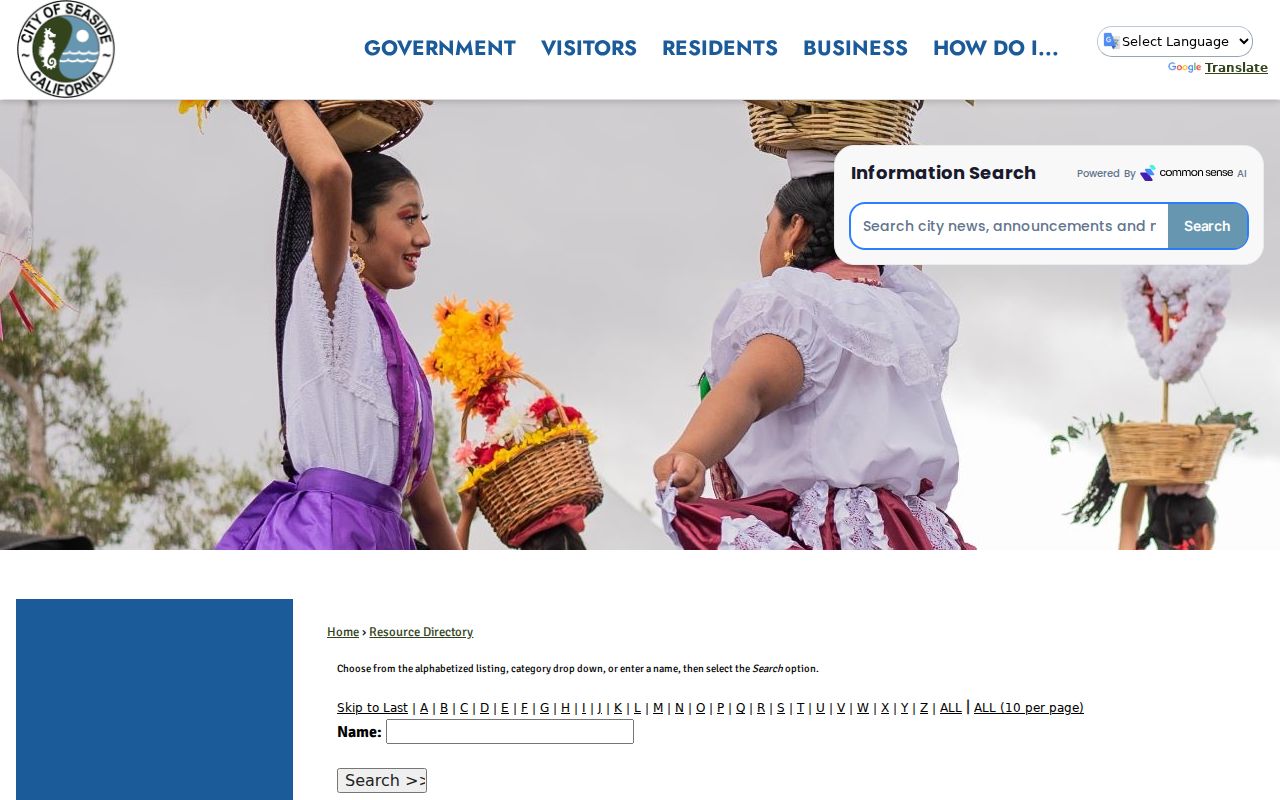
Verify any local listing against the filed entity, fictitious business name, or city licensing office before treating it as a current affiliation.
Professional licensing has a separate search path. The California Department of Consumer Affairs advanced license search can filter by board, license type, number, name, city, county, primary or secondary status, public discipline, and public documents. Some professions use their own boards. A result usually gives the license number, type, name, status, and any public discipline or document links.
The advanced controls matter when a name is common. A city or county filter can reduce false matches, while a license number can carry the search into a later verification call. Do not read a professional record as proof that a person lives in Seaside.
The DCA search shows the fields used to narrow a reported license record.
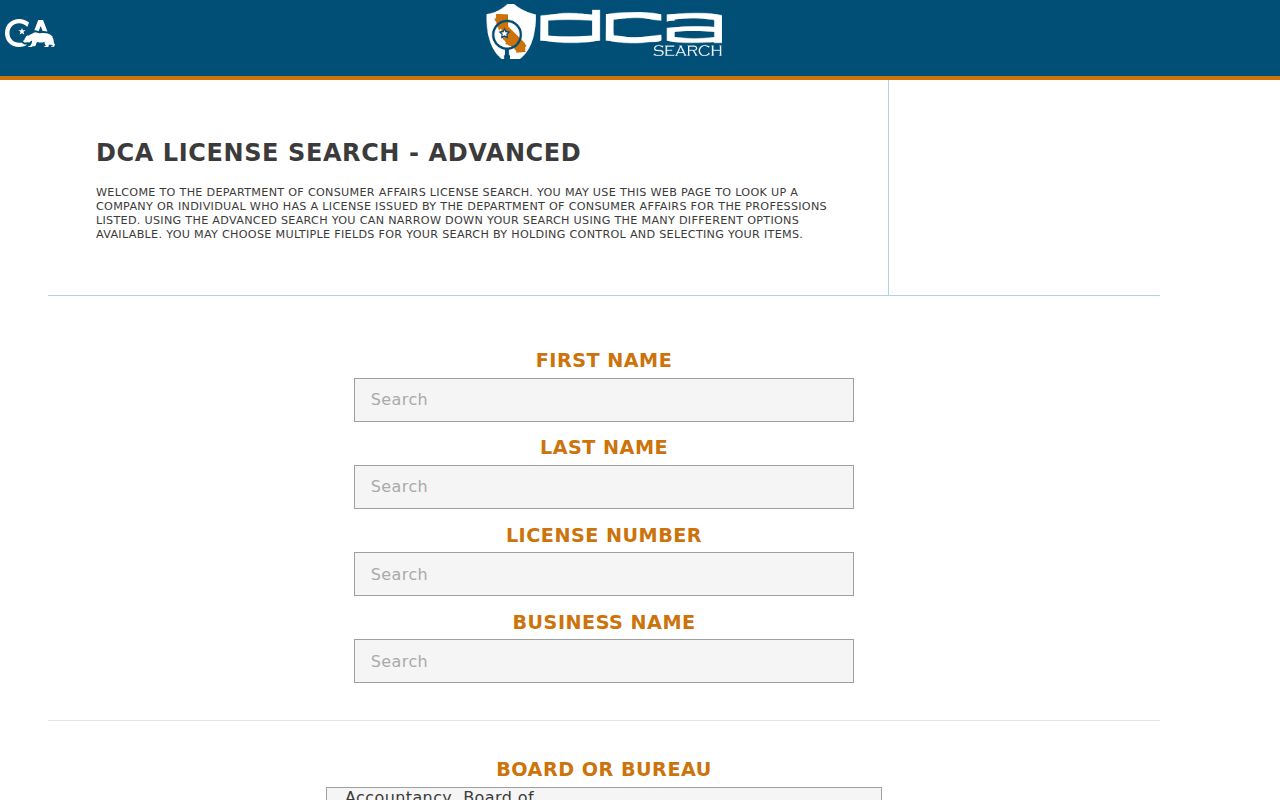
Keep the board, license type, number, status, and record date in the notes so a later check uses the same identity anchor.
Special-Purpose Seaside Resident Checks
Some official locators answer a narrow safety or custody question. California CDCR's CIRIS accepts a CDCR number or a name after its disclaimer and returns selected information such as name, age, number, location, admission, commitment county, and parole-eligible month or year. The federal Bureau of Prisons locator covers identifier searches or a name with demographic refiners and reaches back to 1982. Neither is a general address source or a complete conviction record.
The CDCR CIRIS locator illustrates a limited, selected-data result.
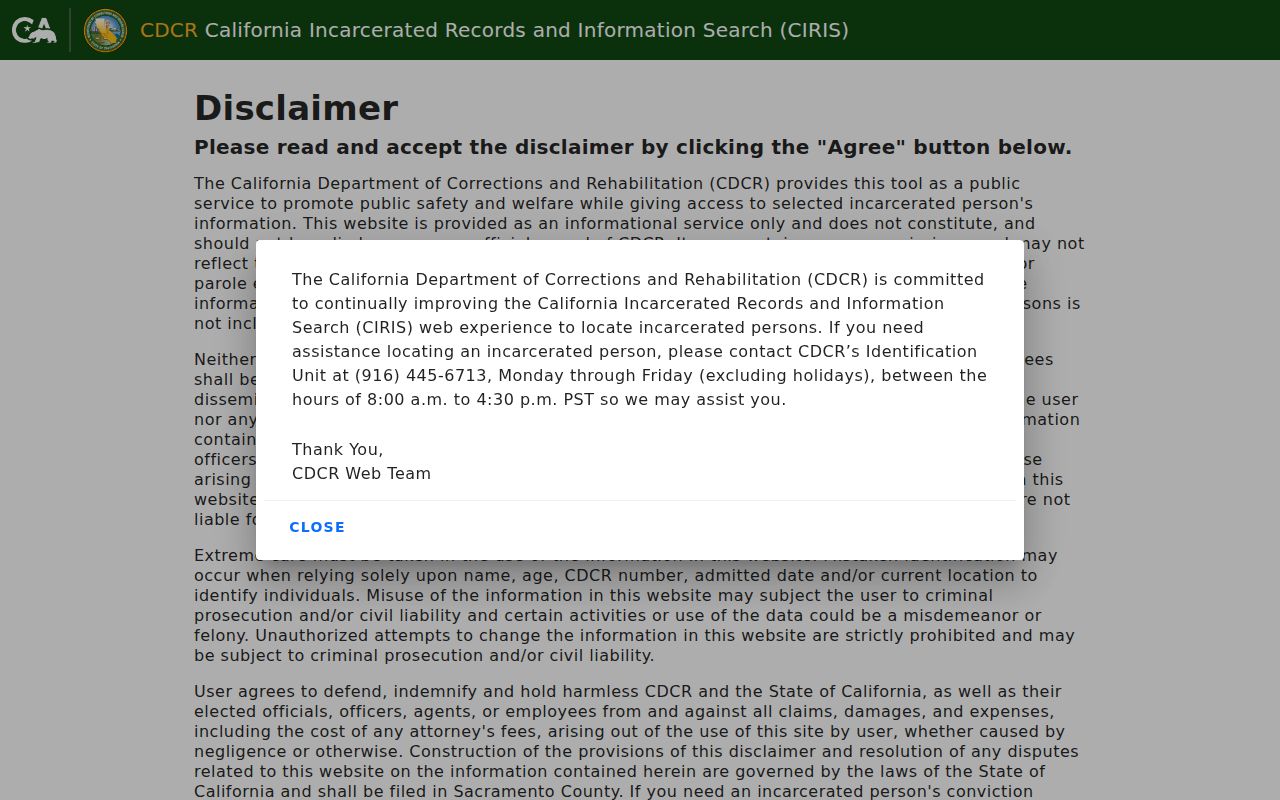
Use the number and source date as the pivot, and confirm any legal or family conclusion with the responsible agency.
The Federal Bureau of Prisons inmate locator uses identifiers or name and demographic fields for records from 1982 onward.
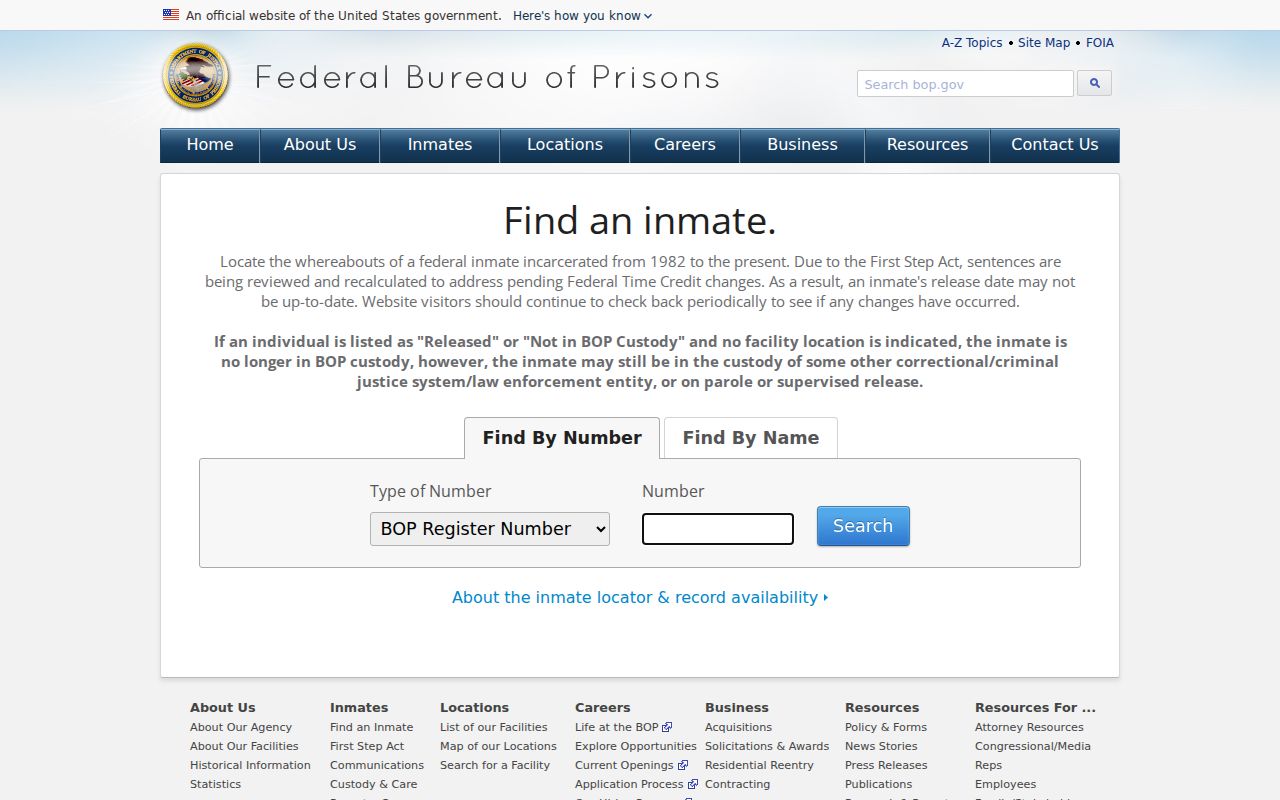
The result is a custody clue, not proof of a Seaside address, family relationship, or current status beyond what the official record states.
California's Megan's Law public search is a separate name, map, and location-vicinity resource with a statutory misuse warning. It should never become a neighborhood list. For a historical clue, California Claim Search accepts a last or business name or a Property ID, with first name, city, and ZIP as optional refiners. A match is a holder-reported city or ZIP clue, not a current resident record.
The California unclaimed-property search is free and secure. Search exact names first, then similar names, and use the claim steps only when identity proof is available.
When a Seaside Record Trail Stops
A stalled result has a reason worth recording. The address may be protected through Safe at Home. A case may be sealed. A vital record may be confidential. An online portal may stop at a coverage boundary, or an older book may still require a library or archive visit. A permit applicant may not be the owner or occupant. Silence is not proof that a person was absent.
Switch channels with the same identifiers. Use a courthouse terminal, a written copy order, the Monterey Public Library's microfilm or local-history shelf, an archive reference request, or a focused California Public Records Act request to the office that actually holds the record. City Hall cannot supply county deeds. A county property page cannot replace a court clerk. A state voter-file request cannot be used as a casual name list.
Seaside's 2026 city AI discovery portal can summarize city website material, Documents on Demand, ordinances, and meeting or video timestamps, but the city says it is discovery only. Use it to find a source, then rely on the official document, portal, agenda, minutes, or records request.
Index, image, and copy: An index is a finding aid. An image is the scanned or displayed record. A certified copy is an official copy issued by the custodian for a purpose that requires certification. Fees, eligibility, and identity rules attach to the copy, not just the name search.
Seaside Resident Privacy Limits
California My Voter Status is for a person's own registration, polling place, and ballot-status check. The voter file is restricted by Elections Code sections 2194 and 18109. An application needs an identified applicant and beneficiary, contact details, a permitted purpose, scope, delivery choice, wet signature, certifications, and proof when required. Unauthorized knowing use is a misdemeanor. It is not a public name, address, or neighborhood browser.
Safe at Home gives qualifying participants a substitute address and protects covered records under Government Code sections 6205 through 6211. The program serves qualifying victims and certain public-service participants and health affiliates. The California Safe at Home program is the correct route for its own eligibility and contact rules. The DMV address rules and protected court, adoption, juvenile, and vital records also limit what a lawful lookup can reveal.
California's public-record misuse rules matter at the point of use. Stalking, threats, electronic harassment, impersonation, and harassment can bring criminal or civil consequences. The California Megan's Law service separately warns against harassment, crime, or discrimination based on its results. Use resident records for personal, genealogical, estate, civic, or safety purposes, and stop when the custodian says a record is protected.
Lawful use. A Seaside resident lookup is for lawful personal research, family history, estate work, civic understanding, or personal safety. Do not use a name, address clue, court result, or protected-record hint to stalk, harass, intimidate, or harm another person.
- Docket
- The court's running record of filings, orders, hearings, and other case events.
- Index versus image
- The index helps locate a record; the image or file contains the document itself and may require a separate access step.
- Certified copy
- A custodian-issued copy with certification that it is an official reproduction, subject to eligibility and fee rules.